

Chronic Back Pain & Chiropractic Treatments
Pain is one way our bodies try to get our attention. When that pain is chronic, people often feel overwhelmed, depressed and hopeless. According to the Global Burden of Disease 2010, low back pain is the number one cause of disability worldwide. Many people who suffer with back pain also suffer from depression due to the impact the pain has in other areas of their lives. If you suffer from low back pain, it is likely you already know how debilitating it can be.
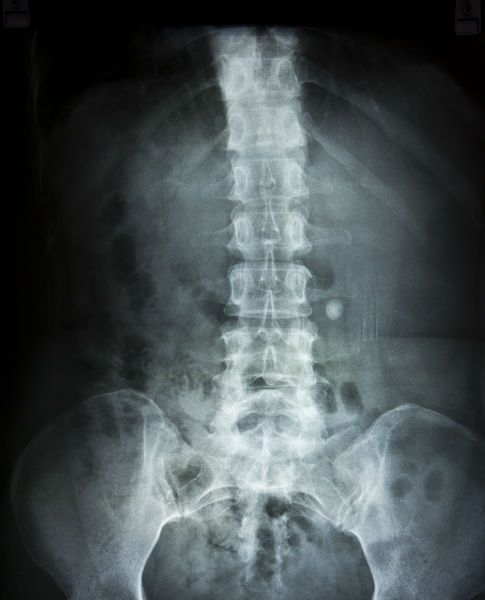
X-Ray of spine are often needed to determine most successful approach.
Can a Chiropractor be a resource for your pain-management plan? Generally speaking, when treating a back pain issue, physicians like to start with conservative and cost-effective approaches first. For many patients, this includes a visit to a Chiropractor. Patients report a decrease in spinal pain with manipulation — particularly with non-specific low back pain. Let’s look at some of the research.
“Patients with chronic low-back pain treated by chiropractors showed greater improvement and satisfaction at one month than patients treated by family physicians. Satisfaction scores were higher for chiropractic patients. A higher proportion of chiropractic patients (56 percent vs. 13 percent) reported that their low-back pain was better or much better, whereas nearly one-third of medical patients reported their low-back pain was worse or much worse.”
– Nyiendo et al (2000), Journal of Manipulative and Physiological Therapeutics
As of May, 2013 the Journal of American Medical Association recommends that patients with low back pain seek chiropractic care as a non-invasive/non-surgical way to manage low back pain.
Bottom line on chronic pain: it can exacerbate other health issues; including mental health issues. If you are one of the millions who live with prolonged back pain, a chiropractor may be a good option for you. Many patients have reduced pain and it is an economical option, as well as one that starts with the least amount of intervention. Your Chiropractor may also be able to give you lifestyle recommendations to reduce the strain on your back. Having a chronic condition means that in order to sustain a quality of life, each sufferer must find a way to navigate and diminish the moments that pain steals away.
Are You Toting Around Too Much Stuff?
Guest Post by Marah Harrington, Office Manager at East End Chiropractic.
Did you know there are health risks associated with carrying an excessive amount of “stuff”? Men and women alike are repeat offenders in this area. We carry heavy purses, briefcases, and computer bags, and most of us are unaware of the risks we run when carrying too many items in a bag.

Many women, myself included, have fallen victim to the large-purse-phenomenon. A bag the size of a small suitcase is now still labeled a “purse” simply because it has a strap. Surely TSA will start catching on to the fact that people are now bringing the equivalent of two carry-ons, not a carry-on and a small purse! Sneaky. I have found that as I buy larger bags, I also convince myself that I need to carry so much more with me. “Why yes, I do need a box of tissues, a first aid kit, a blow dryer and three bricks. JUST IN CASE!”
As fashionable as large bags can be, they are not always practical. Most bags are not designed to equally distribute weight on our backs (the best way for us to carry things) and instead, they pull down one side of the body. Our bodies compensate for the extra weight by leaning to the opposite side, causing an unnatural stress to our spines.
We all know habits are hard to break, but this is one is worth addressing. Here are some simple tips to keep your back and neck more comfortable as you carry your belongings with you:
- Regularly take the time to empty unnecessary items from your bag
- Switch sides frequently so you are not placing the burden entirely on one side of your body
- Select a briefcase or purse with a wide/adjustable strap
Don’t Crack Your Own Neck, Part 3
Earlier, in part 2 of this series, we discussed the second of the 3 issues regarding self-manipulation of your spine: 1) Is it safe? 2) Is it useful? 3) Is it a sign of a deeper problem? Finally, we’re going to talk about the bigger picture regarding cracking your own neck and back.
Is the need to self-manipulate the neck or back indicative of a deeper problem?
Yes. As explained earlier, we often develop abnormal motion patterns in the spine, which cause some spinal joints to become too tight, and some joints to become too loose.
As for the loose (hypermobile) joints, this causes unconscious distress to your body. When your brain senses that there is too much slack in a joint that is so close to your spinal nerves, it will take measures to stabilize that joint. At first, these measures are limited to inflammation and muscle spasm. If not addressed soon enough, the spinal bones will actually change shape and begin to lock together to stabilize the joint. This is known as degenerative joint disease. Degenerative joint disease can be quite painful and can greatly limit your ability to do the things you need to do and want to do.
Tight (hypomobile) joints can be adjusted/manipulated by a qualified chiropractor or osteopath. Restoring normal motion to hypomobile joints allows hypermobile joints to “rest,” in that they do not have to move so much to maintain your normal activities.
In summary, self -manipulation will probably not cause immediate harm. Long-term self-manipulation can cause harm by further moving joints that move too much already. A qualified chiropractic or osteopathic physician can recondition the spinal bones to move normally, usually eliminating the urge to self-manipulate in the first place.
Don’t Crack Your Own Neck, Part 1
Self-manipulation is the term used for cracking, or popping, one’s own neck or back.
Because this is such a common practice, the question regarding the safety of self-manipulation is often brought up in our office.
In part 1 of this article, we will discuss the first of the following three things regarding self-manipulation: 1) Is it safe? 2) Is it useful? 3) Is it a sign of a deeper problem?
Is self-manipulation safe?
The most common arguments against self-manipulation are that one could fracture (break) a bone, cause a stroke, or cause arthritis.
Honestly, in my 8 years of practice, I am not aware of any particular case where someone has either broken a vertebral bone or caused themselves to have a stroke has a result of self-manipulation. That’s not to say that it couldn’t happen, but it’s highly unlikely. As far as causing arthritis, the clinical literature is not very clear. I’m doubtful that the act of self-manipulation, in and of itself, causes arthritis. Rather, the constant urge to self manipulate is indicative of a condition that can lead to arthritis. More on that later.
The safety hazards of self-manipulation are much more long-term, and that leads us to the second question…which we’ll discuss next time. If at any time you need an answer to a question about your musculoskeletal system, please feel free to call our office at 615-650-6533.